Hamami: Tool to Sensual Landscape
A concrete-shell hamam for Istanbul, generated from RGB maps of acoustics, light and heat, with gelatin-mould and thin-shell plaster casting research.
- Year
- 2018–2019
- Type
- Render
- Role
- Co-author
- Location
- Istanbul, TR
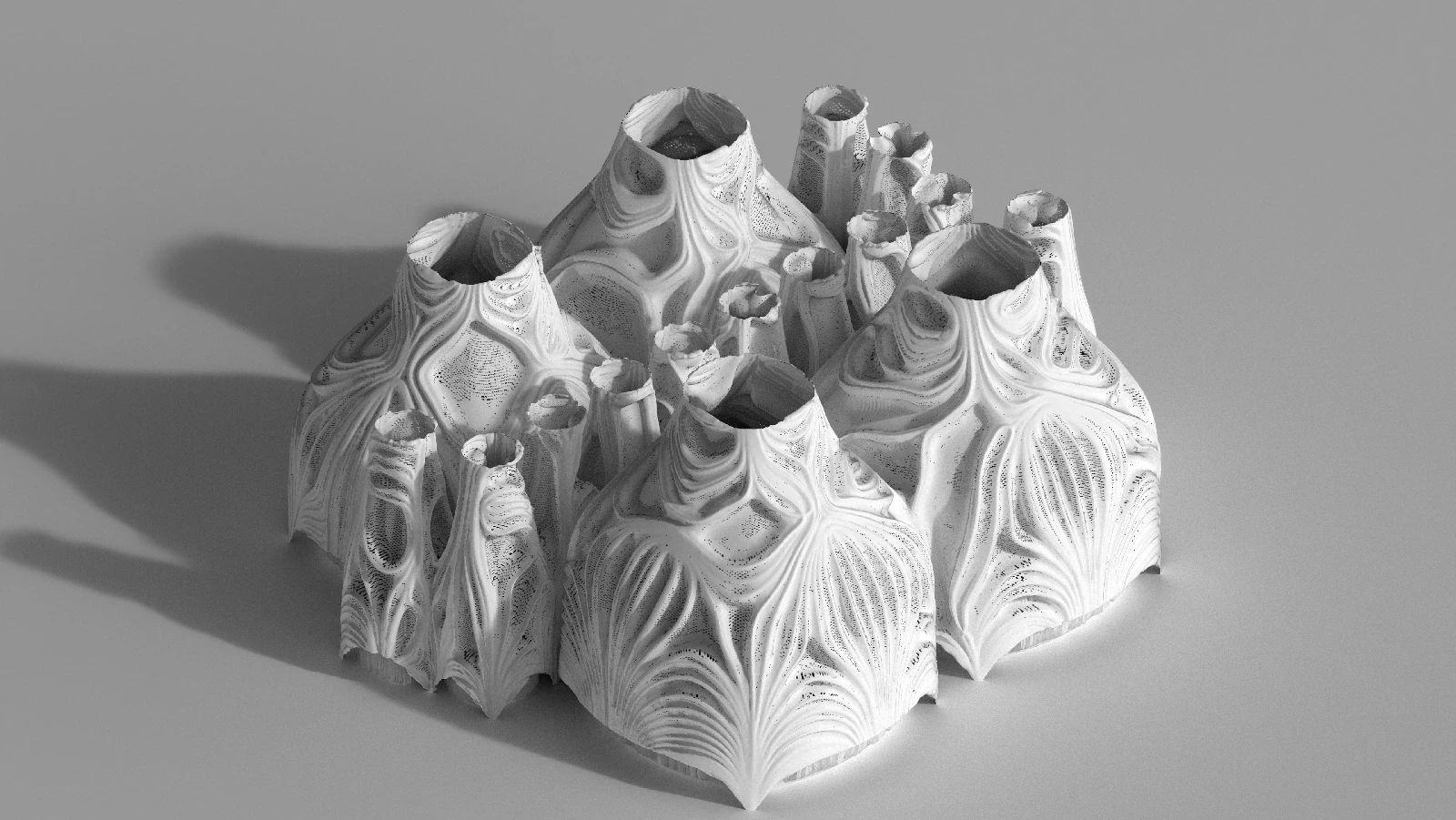
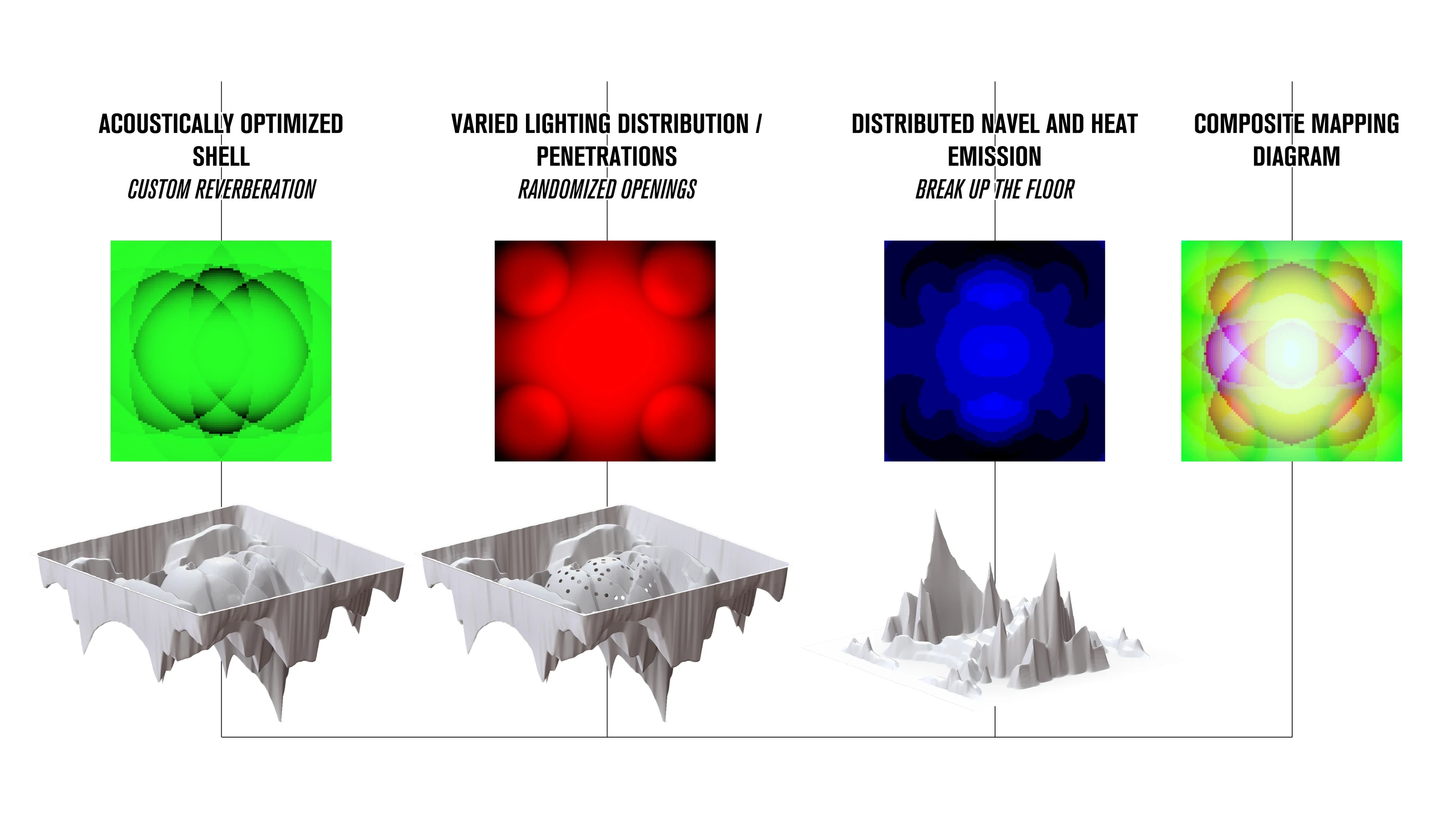
The brief was a concrete shell structure for a hamam in Istanbul. Using structural analysis and energy design tools, the shell had to work as a system that shapes the space and its qualities. We built a tool that allows a dramatic shift of sensation within one space by controlling the shell’s geometry in response to environmental conditions.
We chose three effects: acoustics, since the hamam is exceptionally reverberant; lighting, given the changing qualities of light in the space; and thermodynamics, given the importance of heat. Each became a channel in a pixel-based map — green for acoustics, red for the density of openings for light, blue for the distribution of heat on the floor (the navel). Because the maps could be drawn by hand or generated automatically, we had a nearly limitless combination of spaces to choose from.
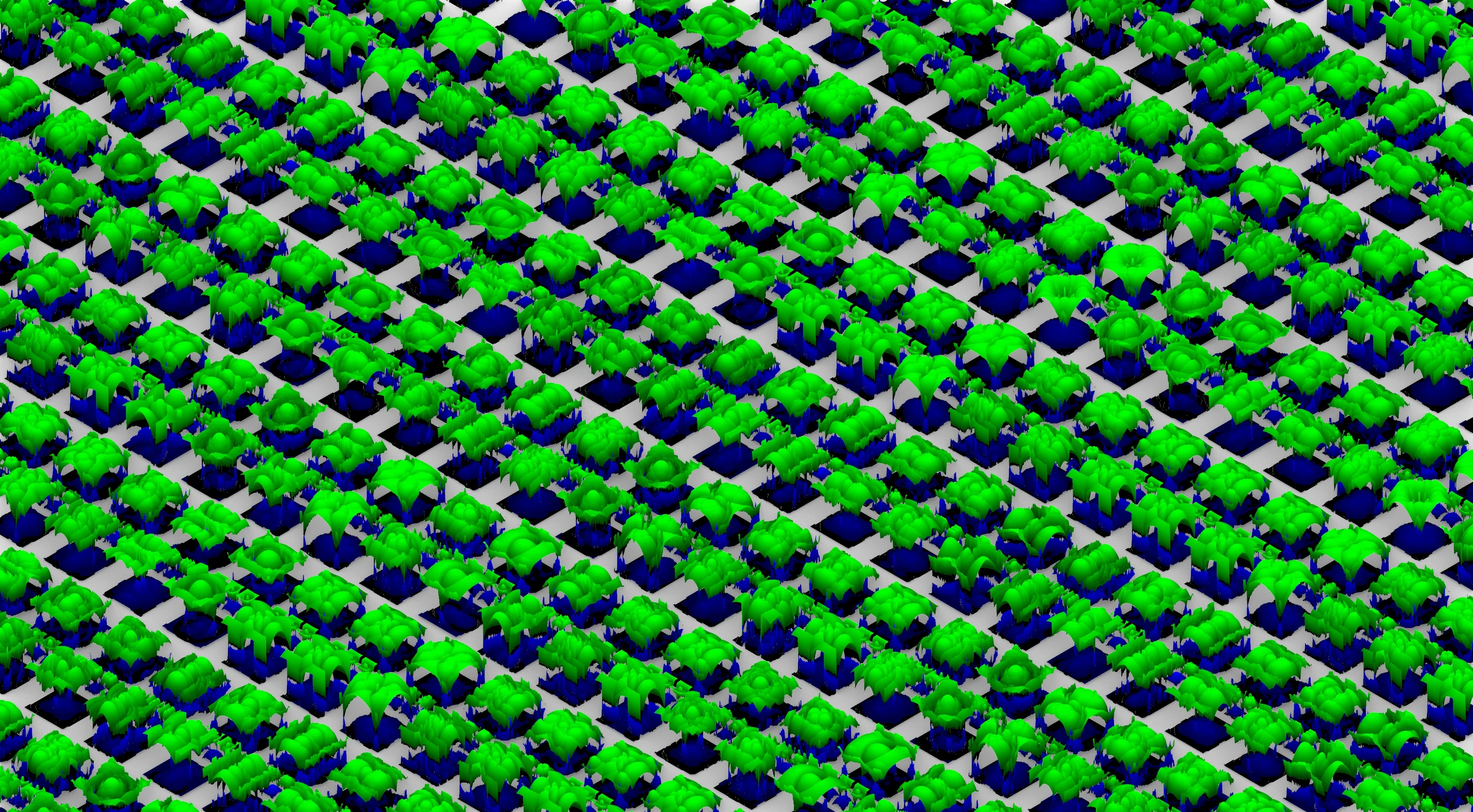
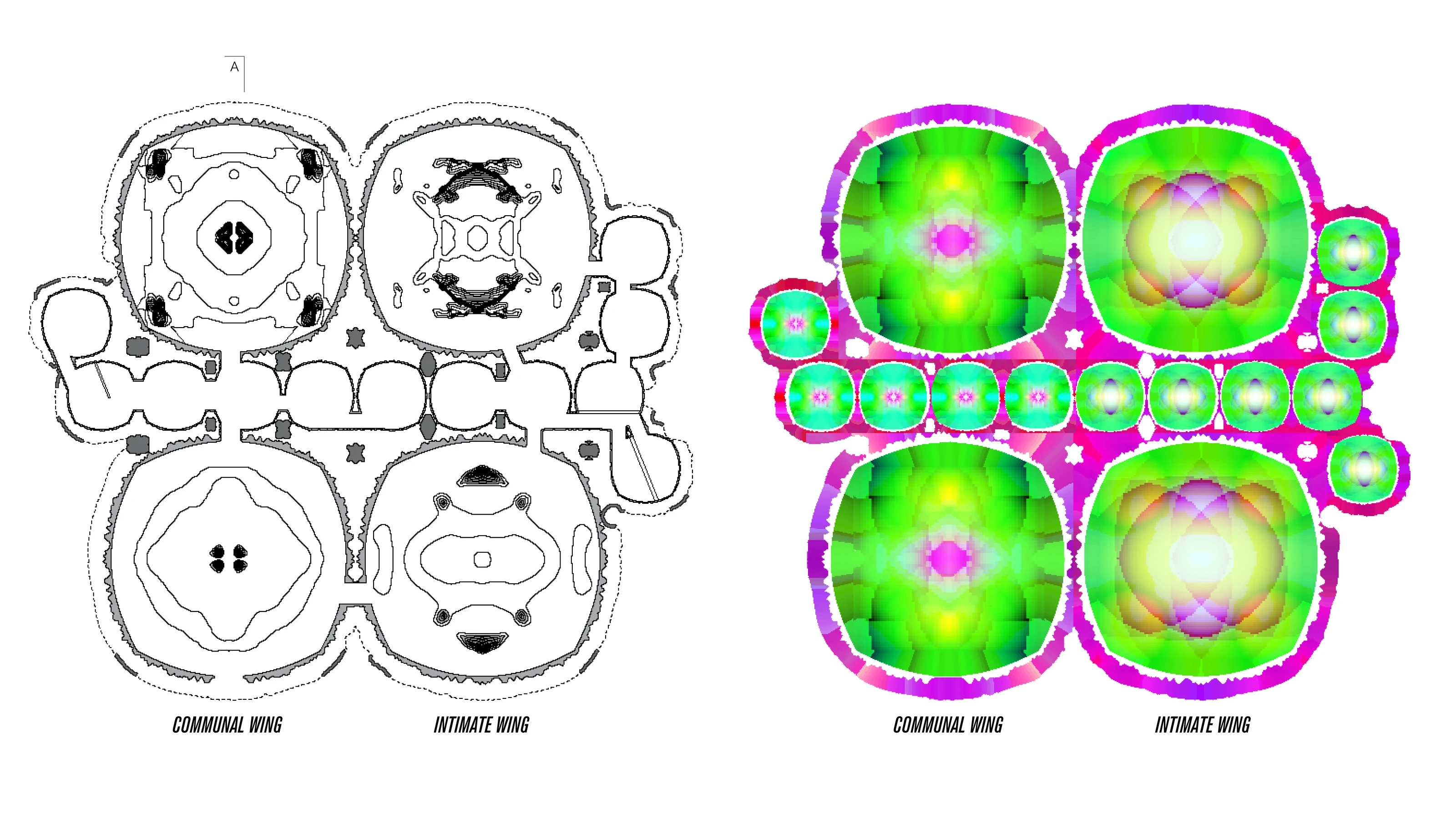
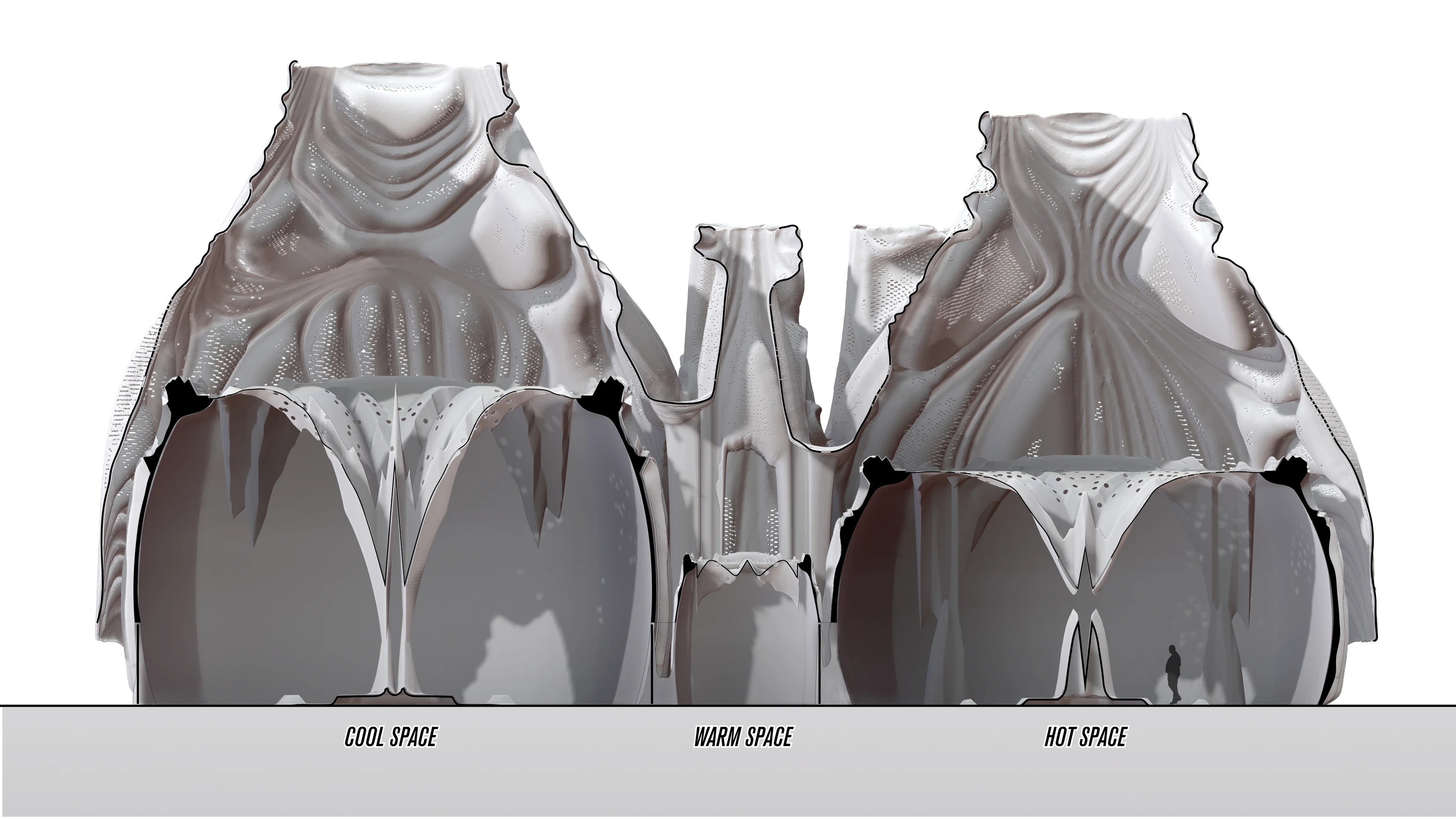
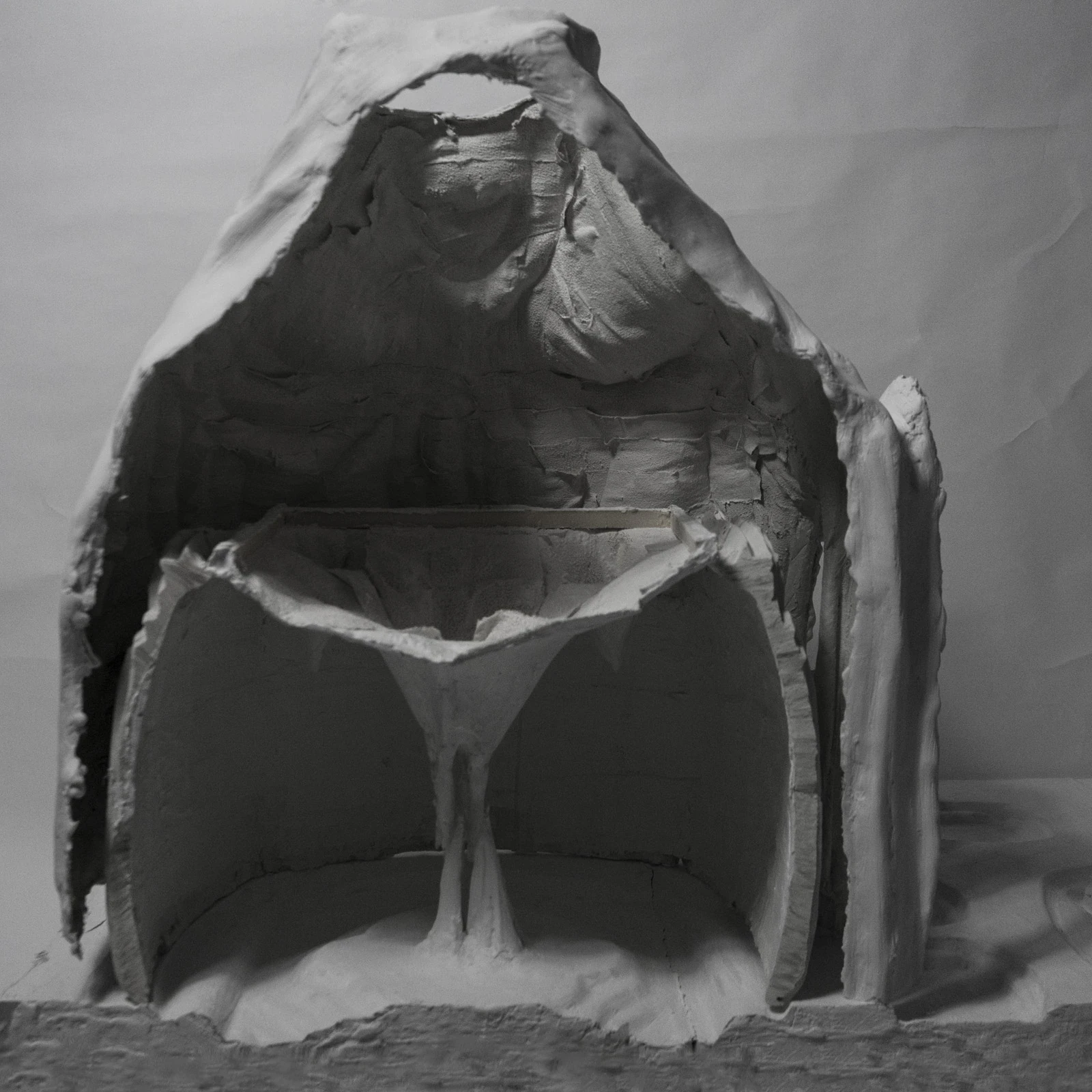
We chose two options: one with more intimate effects and spatial qualities, one more communal. The interstitial spaces between them still needed shelter, so a self-supporting outer shell system encloses them and separates the baths from the city. Inner and outer shells are corrugated according to the forces acting on them under gravity, which reduces their thickness and increases their stability.
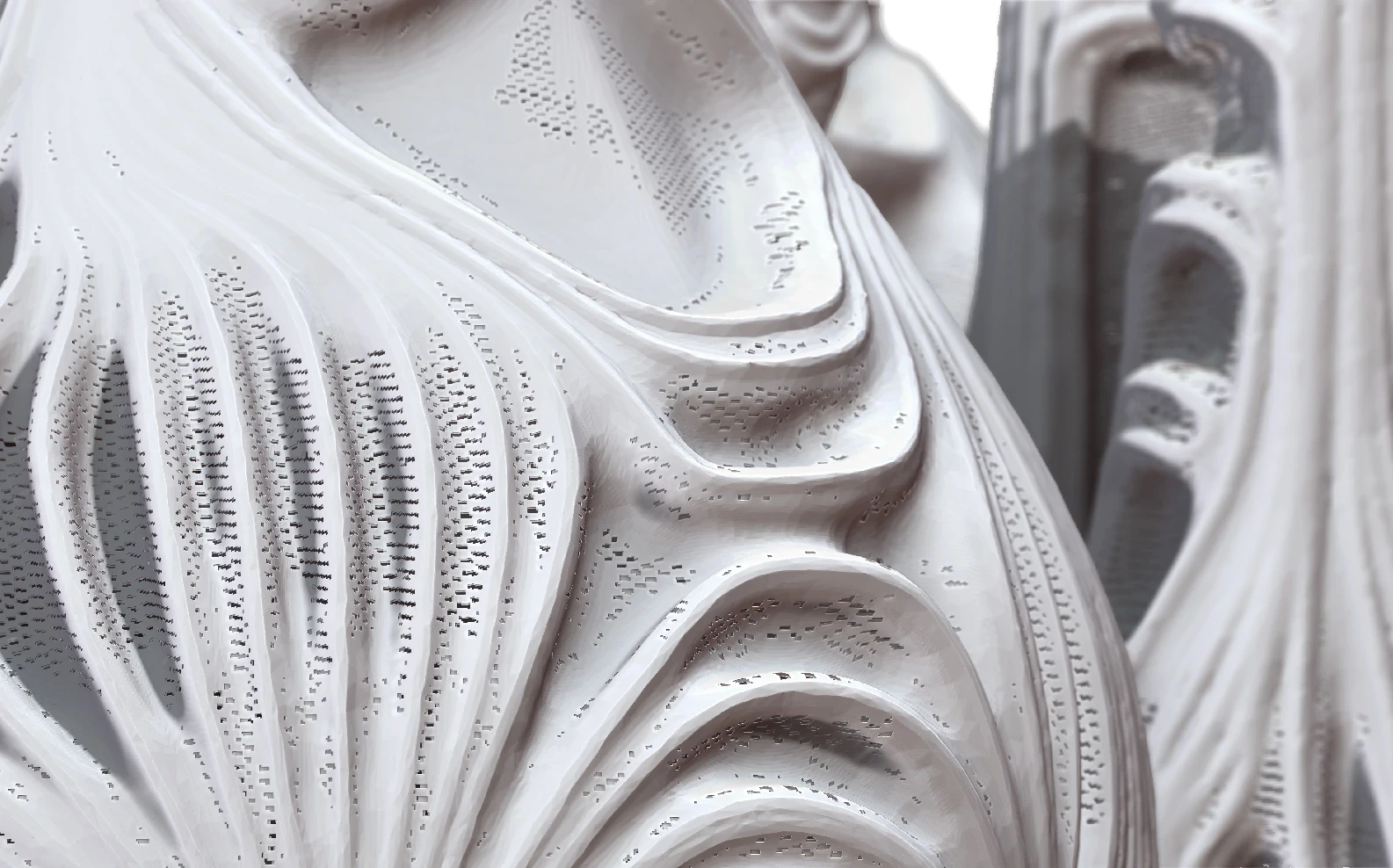
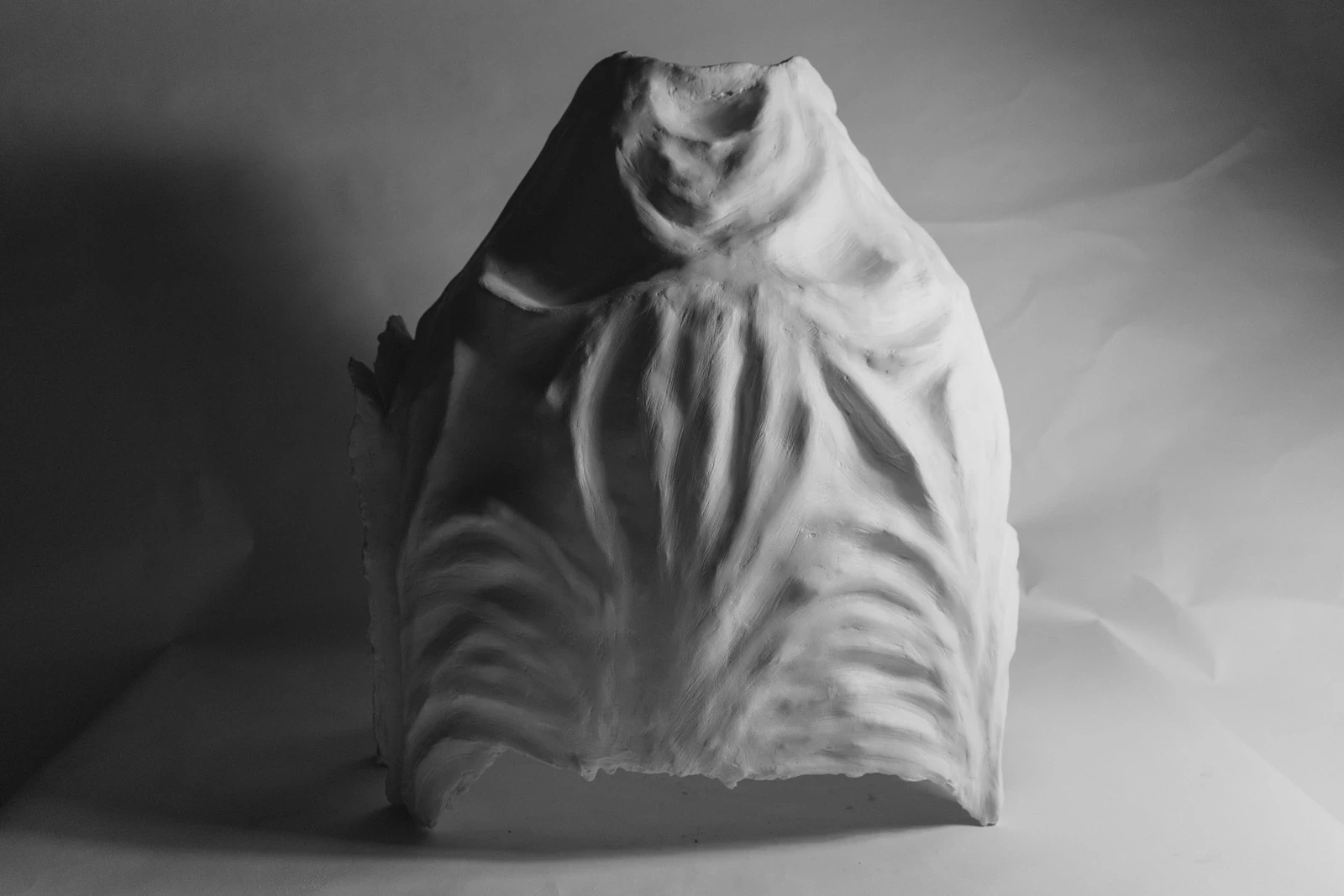
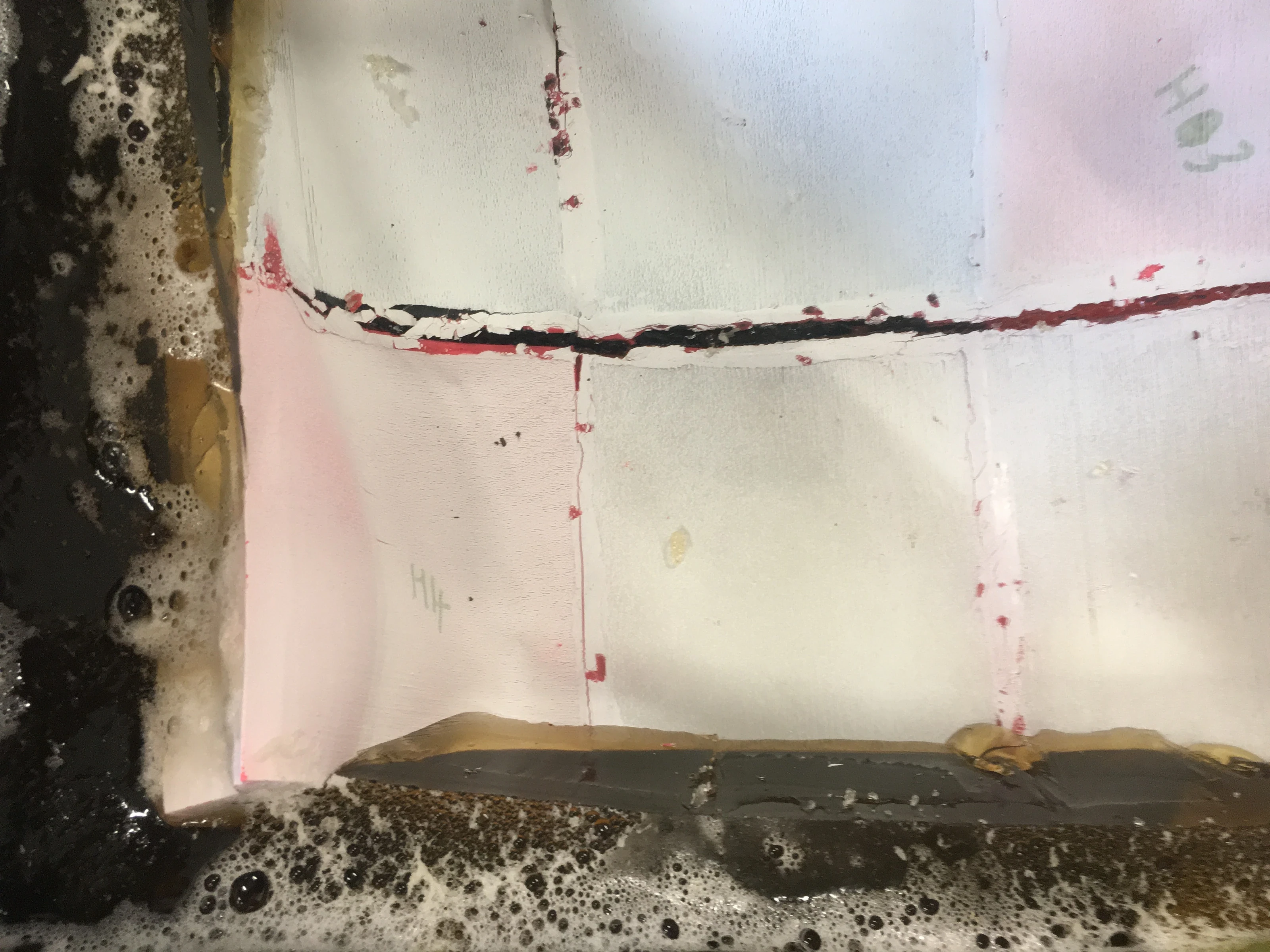
For the models we developed a reusable gelatin mould: gelatin mixed with glycerine and water makes a firm material similar to silicone, at a fraction of the price, and it can be re-melted and re-cast. Gelatin was cast around 3D-printed positives; once cured, the print was removed and plaster poured in its place. For larger pieces — up to 40 × 25 × 10 cm — we adapted the formula with more gelatin and less glycerine, mixing 30 litres in total.


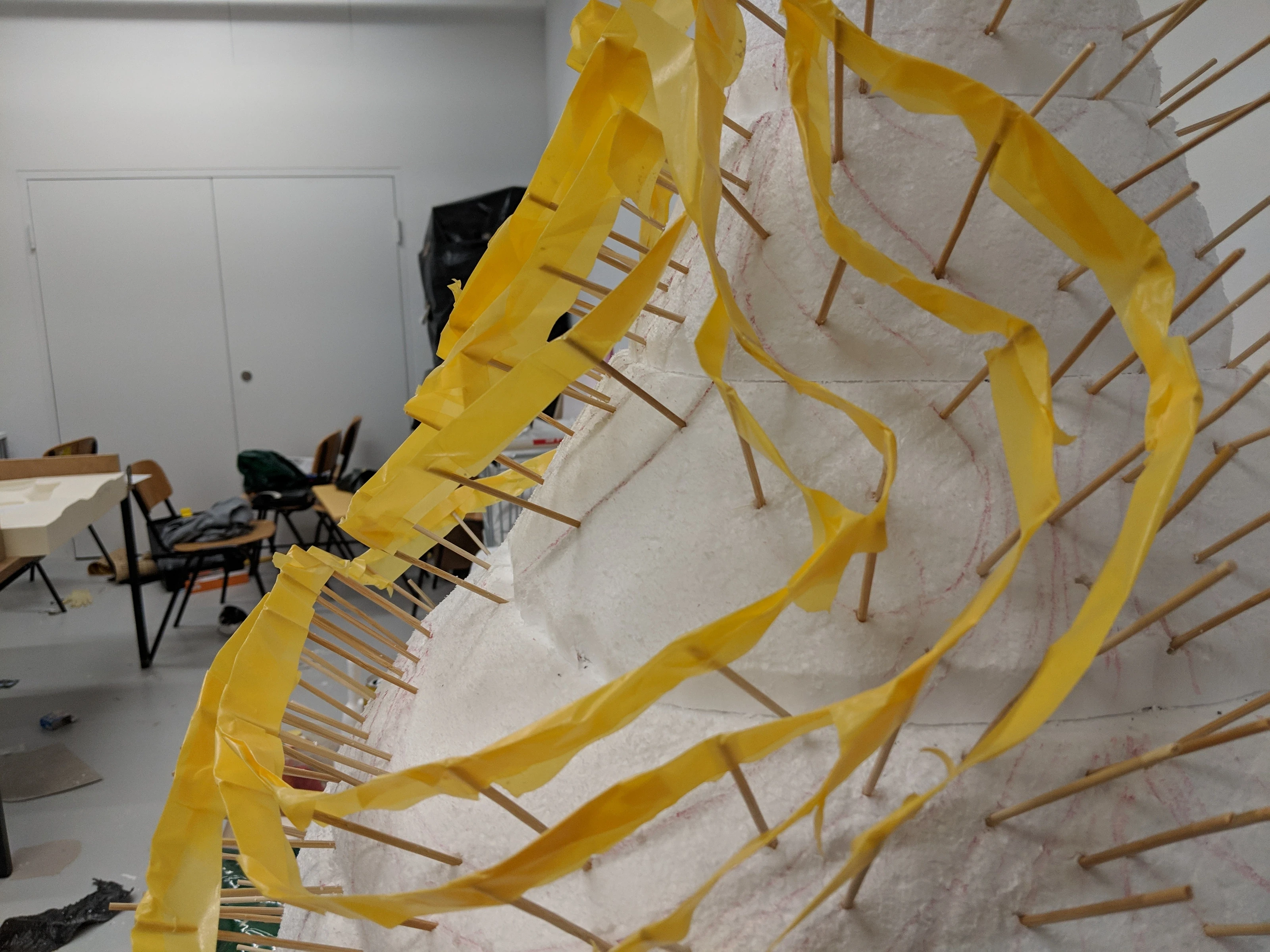
For thin shells we built supports from wooden sticks and tape as ribs, laid plaster bandages across them and painted both sides with liquid plaster, adding layers until the 2–3 mm shell could stand without its supports. A projector drew the reinforcement lines from the digital model onto the surface.