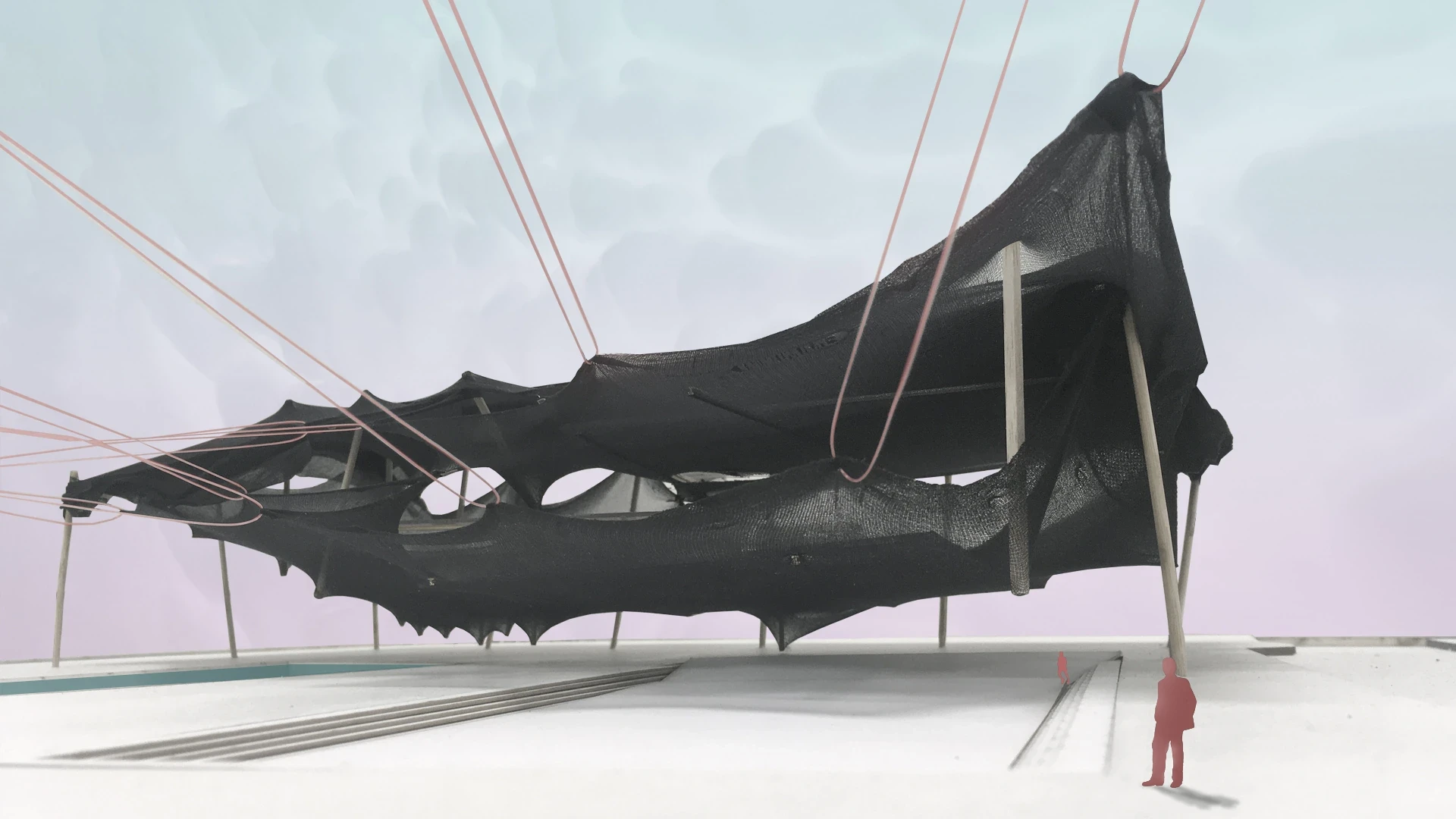
Multilayered Tensegrity
A design tool that matches simulated tensile behaviour to physical models, used to propose a multi-storey tensegrity stadium — checked against the model in AR.
- Year
- 2018
- Type
- Research
- Role
- Author
- Location
- Vienna, AT
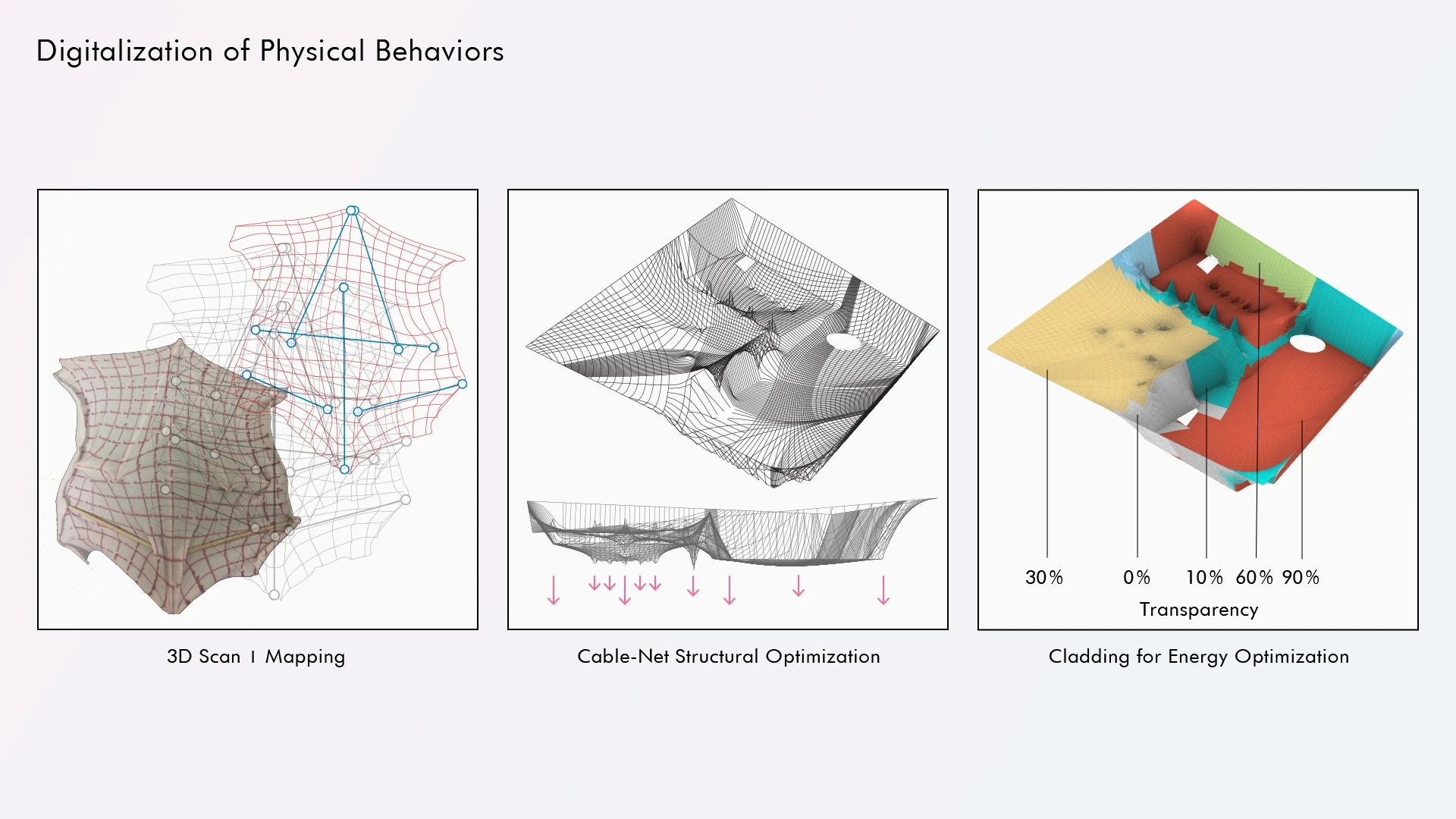
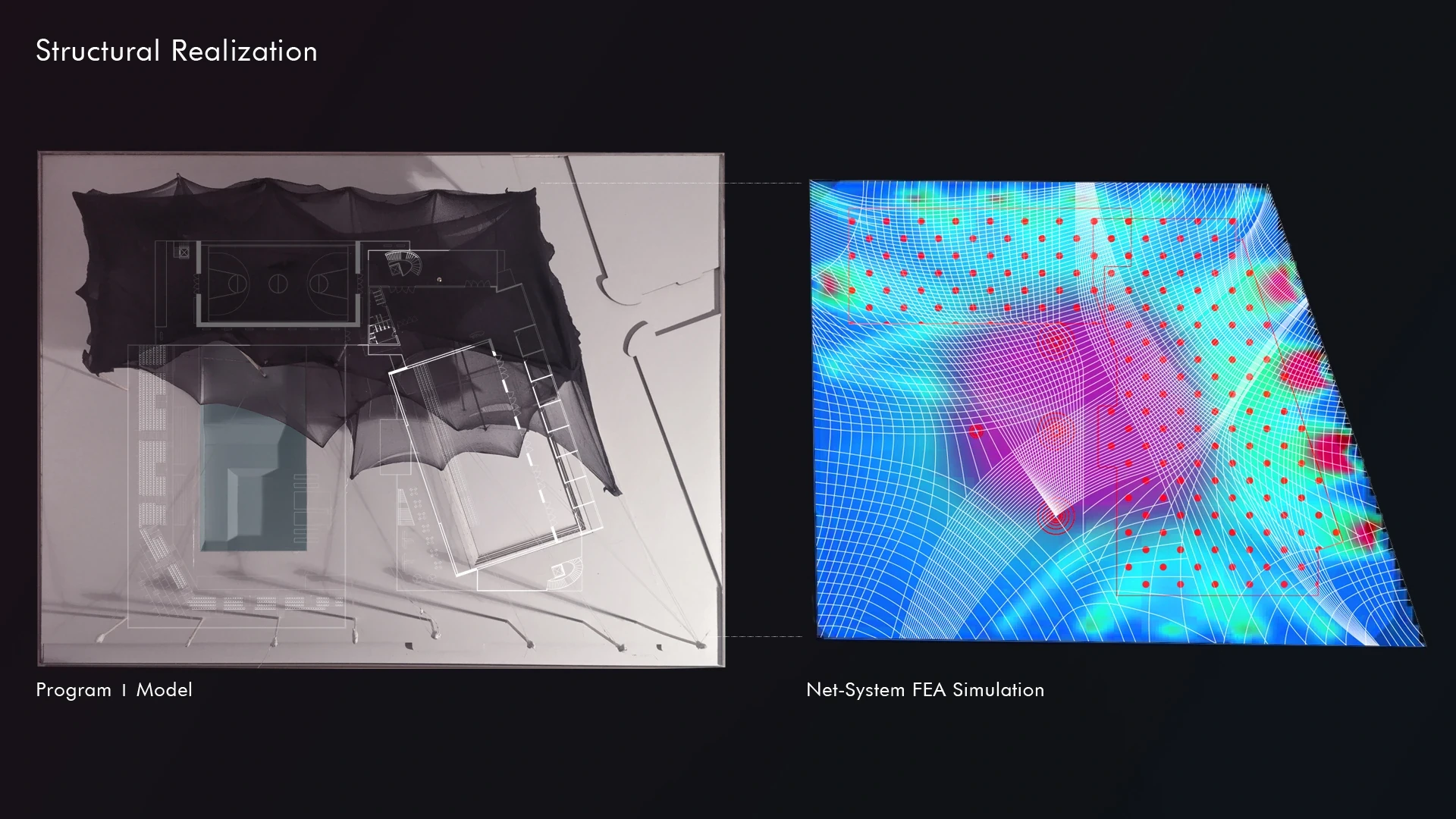
This project develops a design tool that synchronises tensile behaviour in a digital model with its physical counterpart. The matching is done by observing how grid-patterned physical tensile models deflect, and simulating that deflection with Kangaroo and Karamba. Being able to predict the behaviour makes form-finding for tensegrity structures much easier.
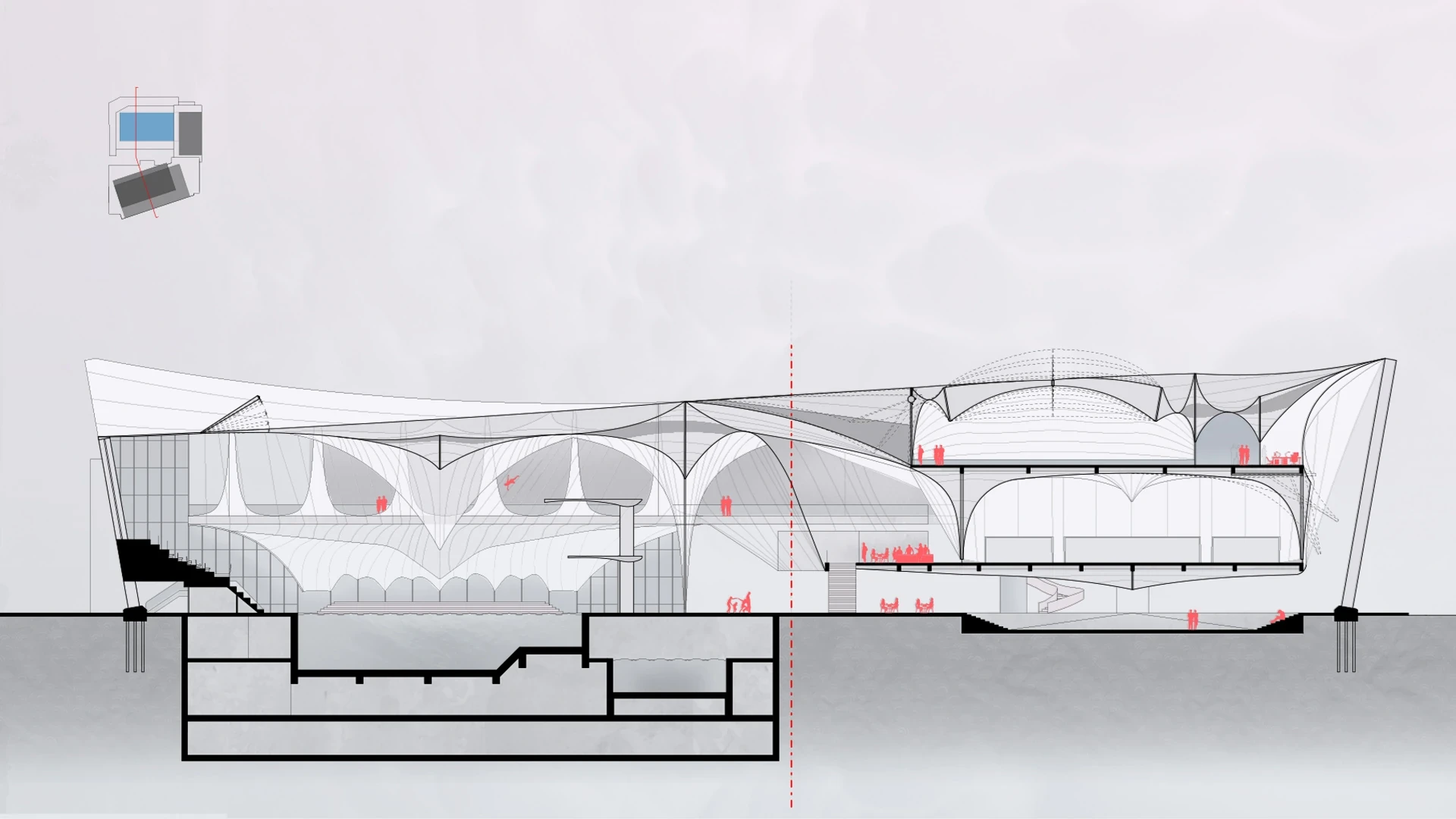
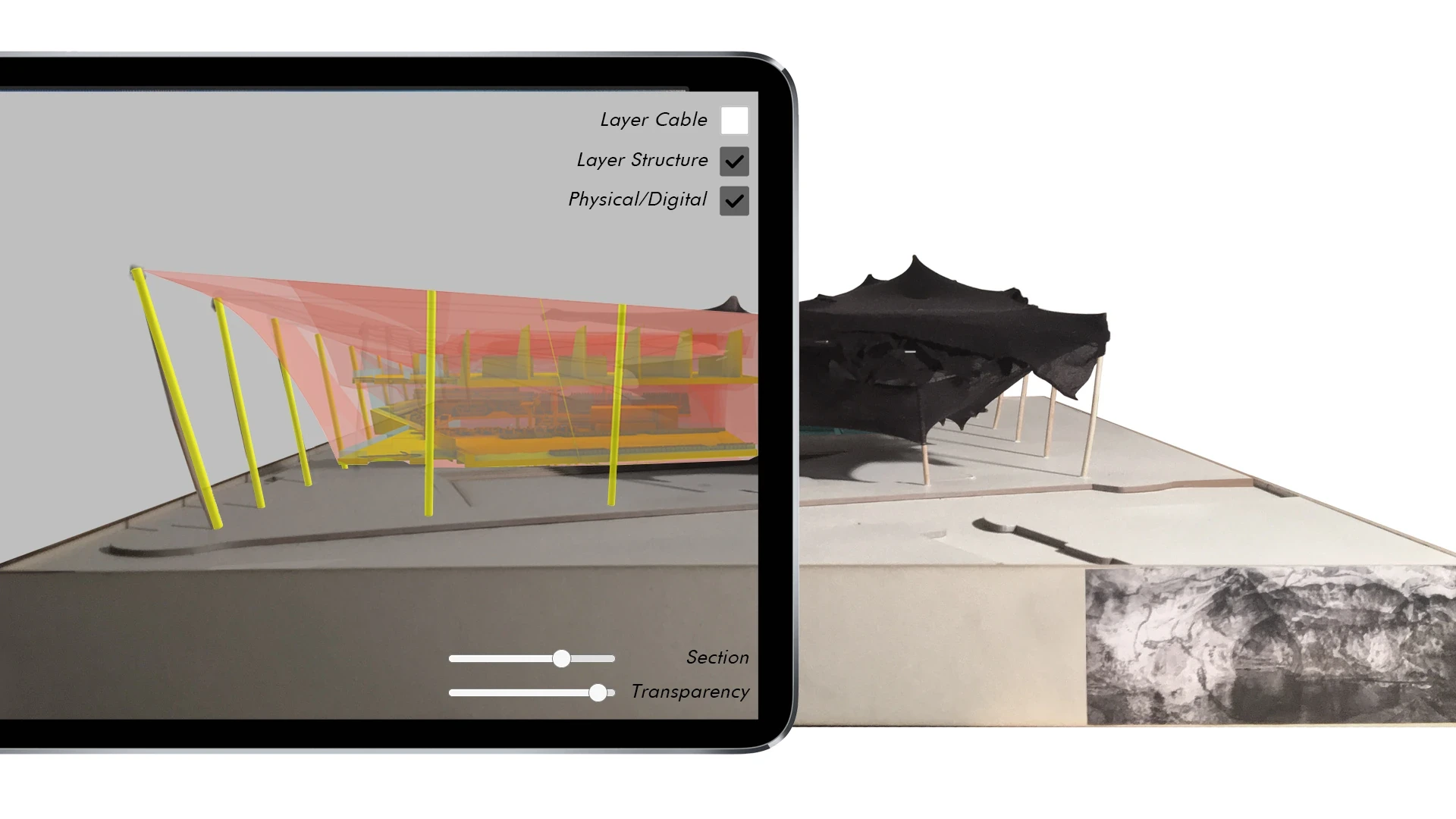
With the tool I proposed a multilayered tensegrity structure for a stadium — a complex programme on several floors carried by tensegrity. The structure minimises the visual sense of gravity and maximises transparency. The physical model can then be checked in augmented reality, built in Unity, to see how closely the digital and physical tensile structures match.