Paper Cave: 3D-2D-3D
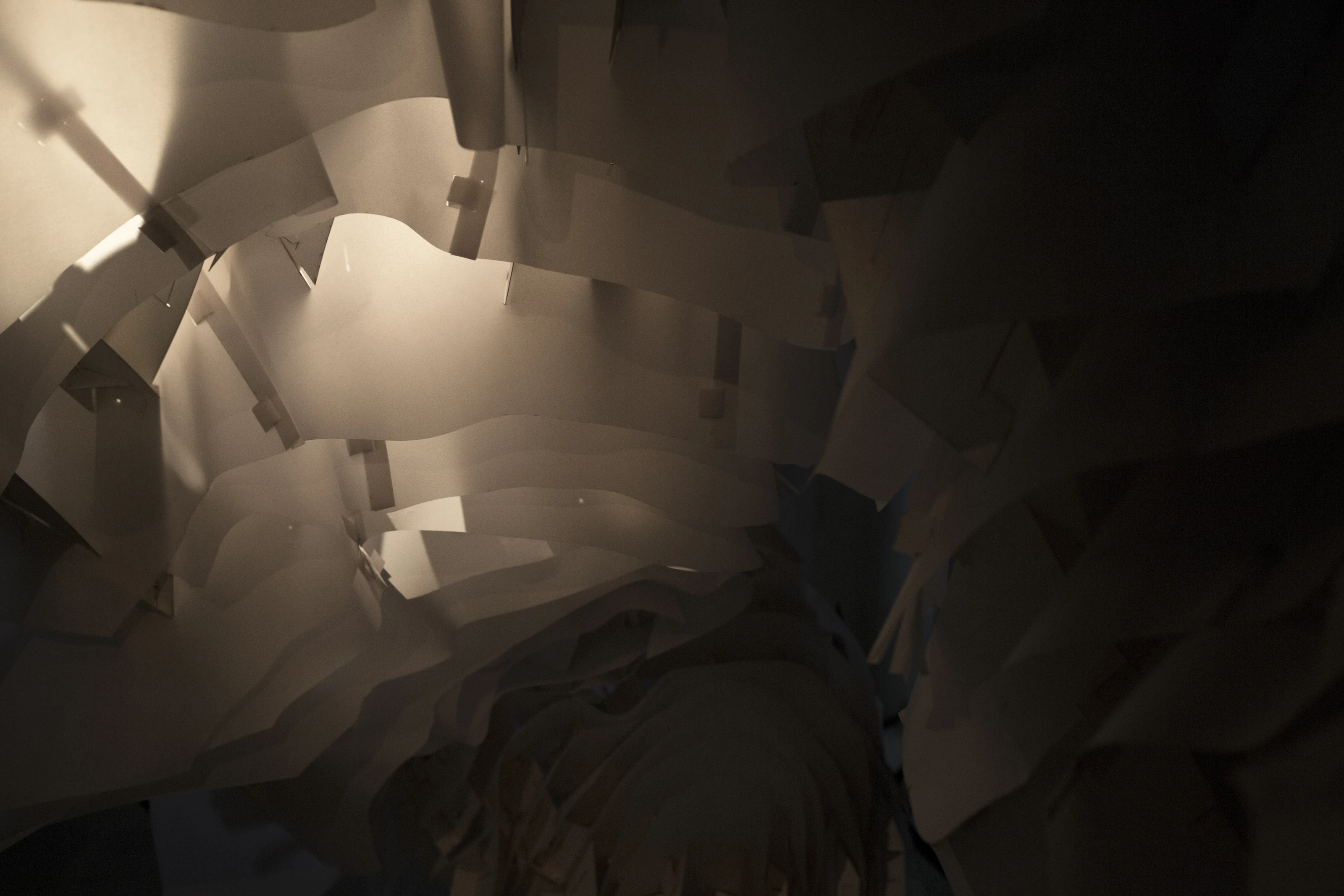
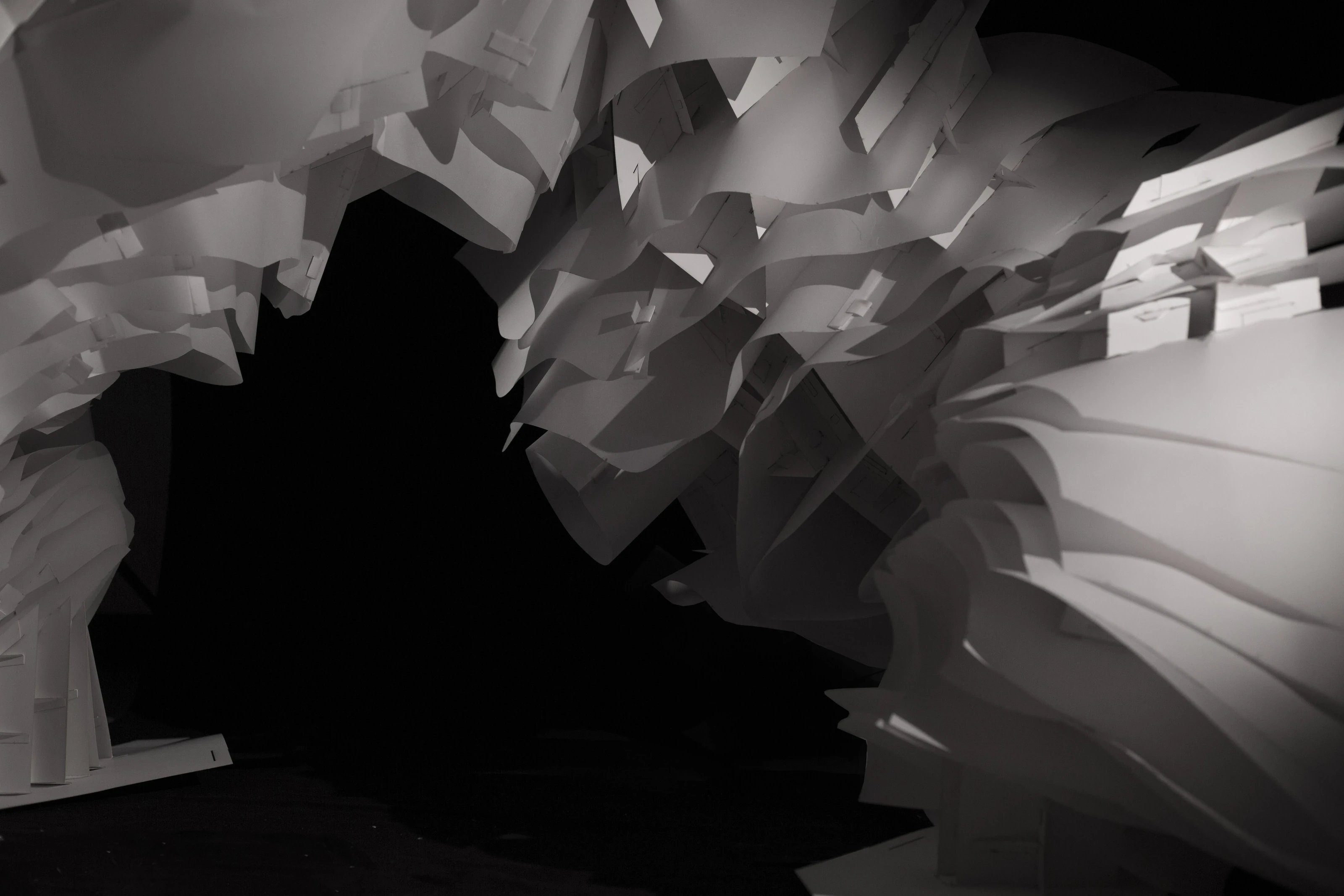
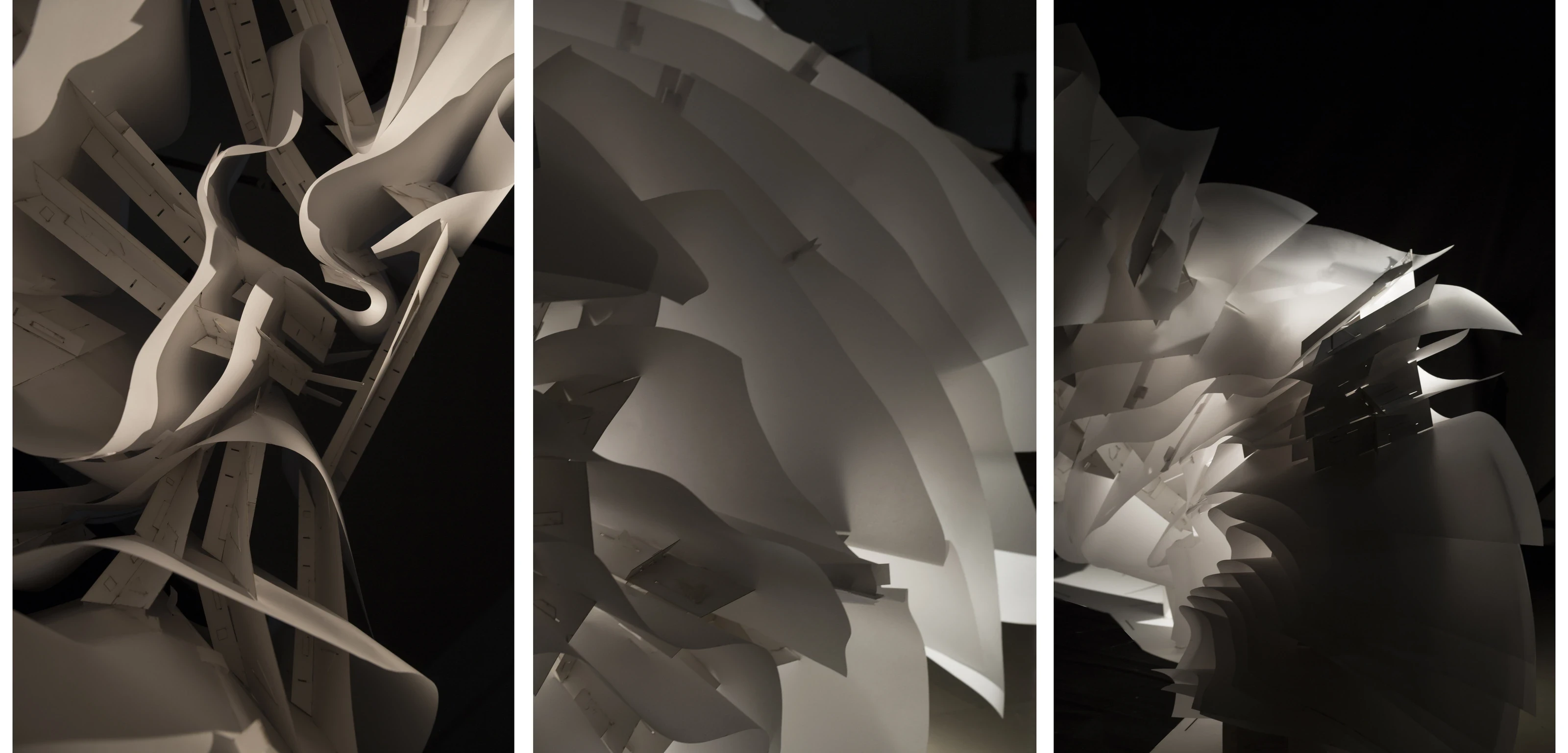
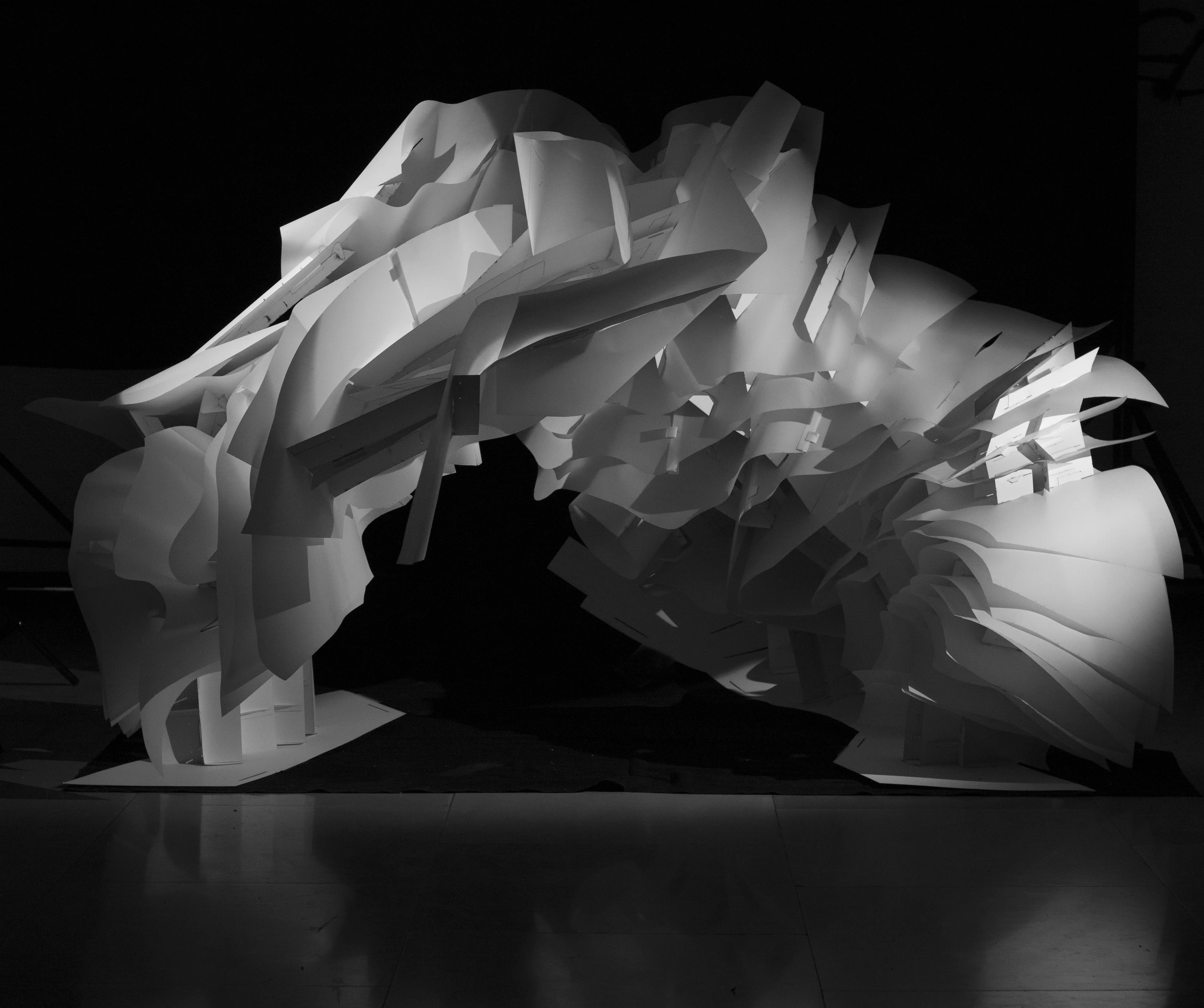
A paper structure that translates how a laser scanner sees space — points measured from one origin — into flat sheets and back into three dimensions.
- Year
- 2017–2018
- Type
- Fabrication
- Role
- Co-author
How can the process of laser scanning be translated into something physical? A laser scanner produces a 3D model directly as a point cloud, whose resolution depends on each point’s distance from the scanner — it works in polar coordinates around one origin rather than in a Cartesian grid.
Paper is always manufactured flat. We studied the transformation between the scanner’s polar coordinates and Cartesian ones, which are easier to project onto a flat surface. The lines a scanner extracts become extruded strips of paper, and the strips together build a new geometry.